Buxton secret garden · Leytonstone, London

A secret garden you can read.

A school garden full of life that most people walk straight past. Now each corner can tell you who lives there, give you something to find, or hold you still for a minute, on the phone already in your pocket.

No app to download. No screens in the garden.

  • Spatial design
  • Visitor experience
  • Outdoor learning
Walk it on your phone
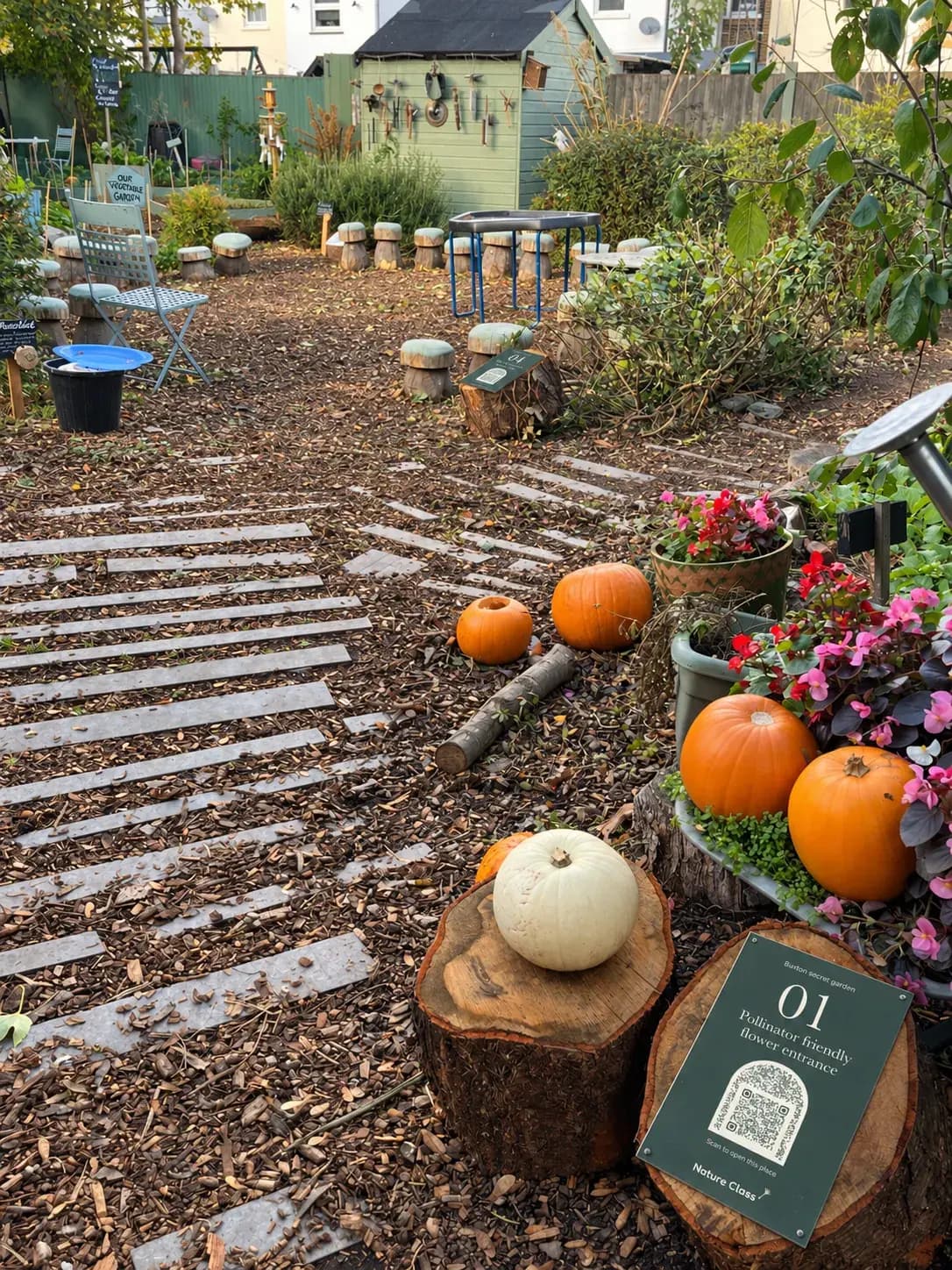
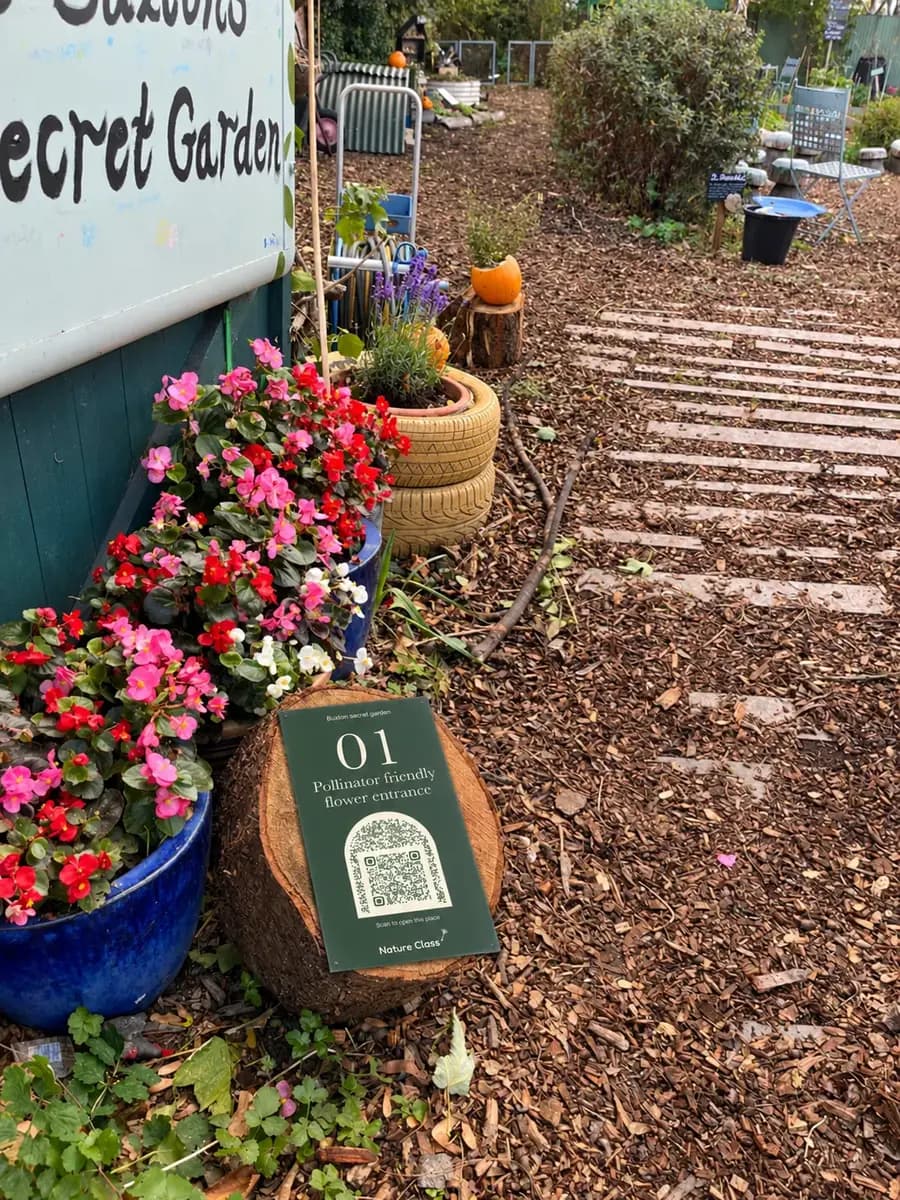
The woodchip path into the garden, pumpkins on log rounds and sign 01 among the flower pots
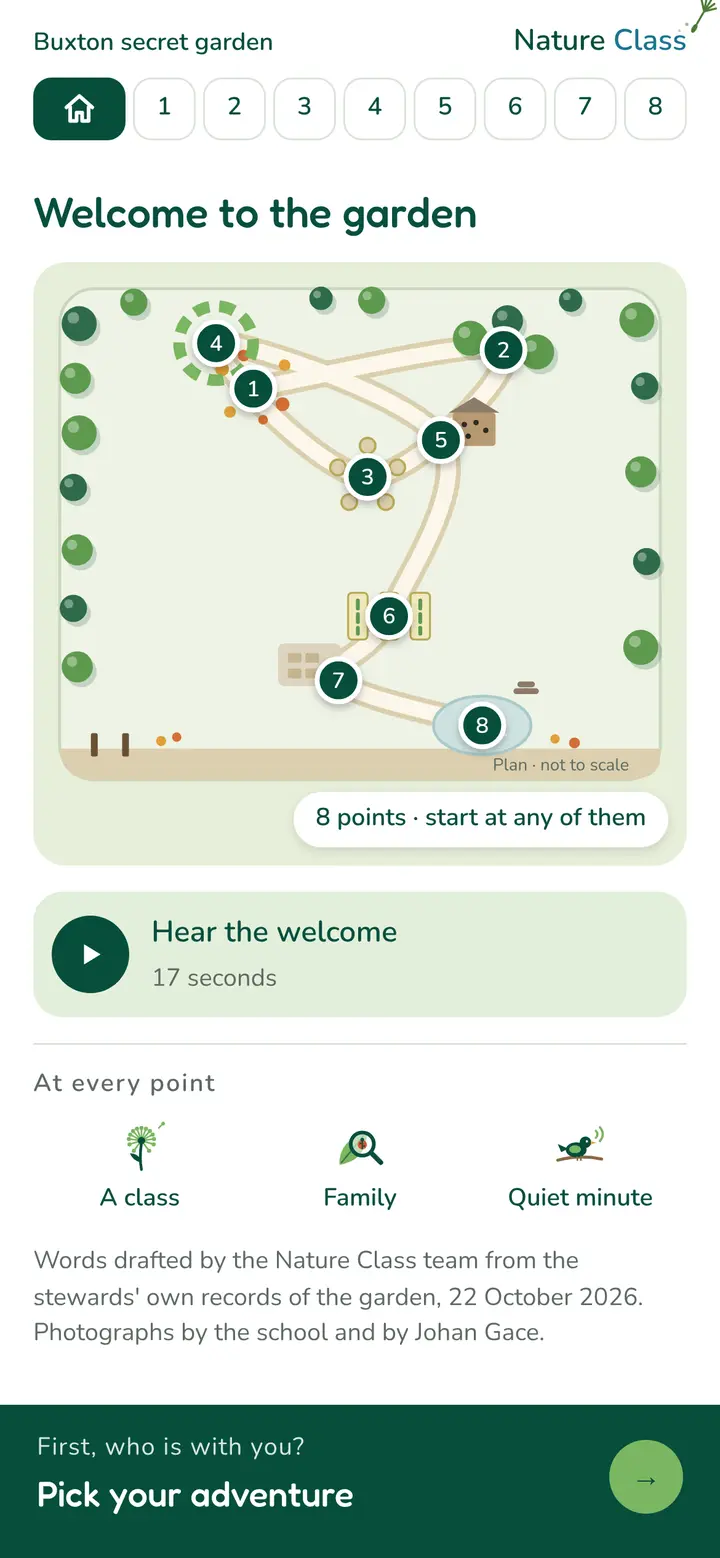
Phone screen: Welcome to the garden, a plan with eight numbered points
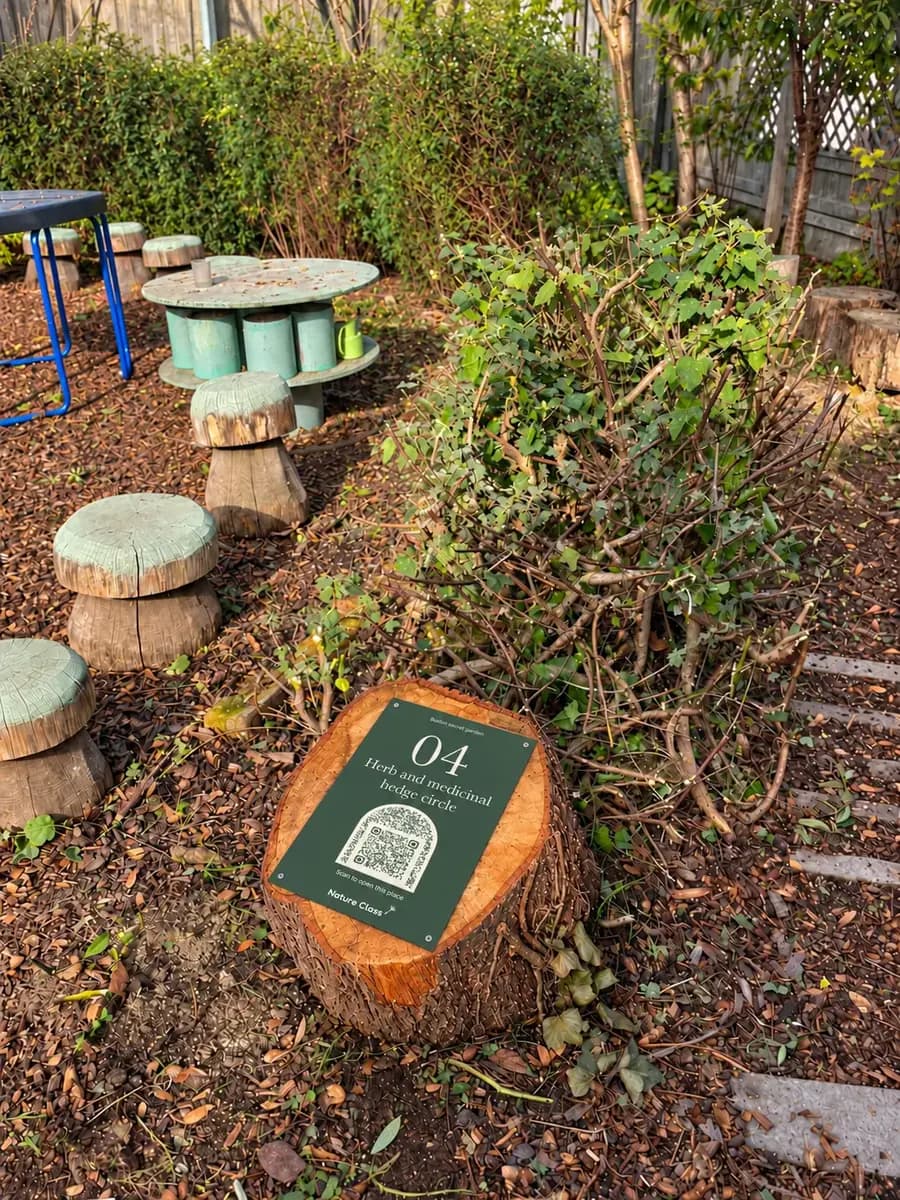
The herb and medicinal hedge circle, the green tool shed behind it
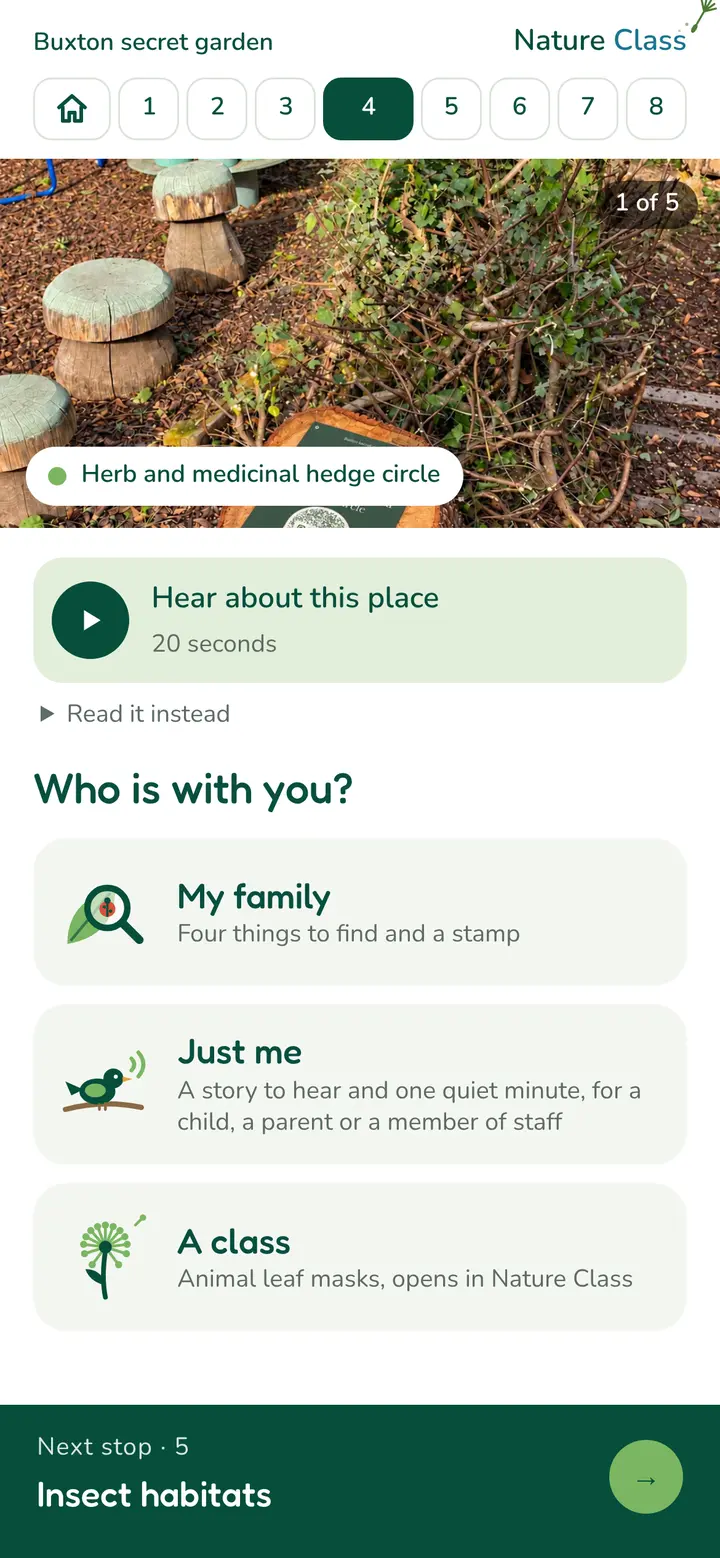
Phone screen at the herb and medicinal hedge circle: a photo, a 20 second story, and the question who is with you

At the herb circle

Stand still for a moment, and the garden starts talking.

“Use your nose here. The little chalk signs tell you which plant is which. Rosemary and bay are both used in cooking. St John’s wort has been used in herbal medicine for a long, long time.”

Point your camera and the spot in front of you tells its story, in under half a minute, in the garden’s own words. Then one question: who is with you?

Eight places, one walk.

One walk from the flower entrance to the pond. Each place has its own story, its own things to find and its own lesson.
4137256804 Herb hedge circle01 Flower entrance03 Mushroom stool circle07 Small learning space02 Fruit orchard border05 Insect habitats06 Vegetable garden08 Pond and log piles
41372568
Sign 04 on a log round by the herb hedge
04 Herb hedge circle
Sign 01 on a log round beside pots of red and pink flowers
01 Flower entrance
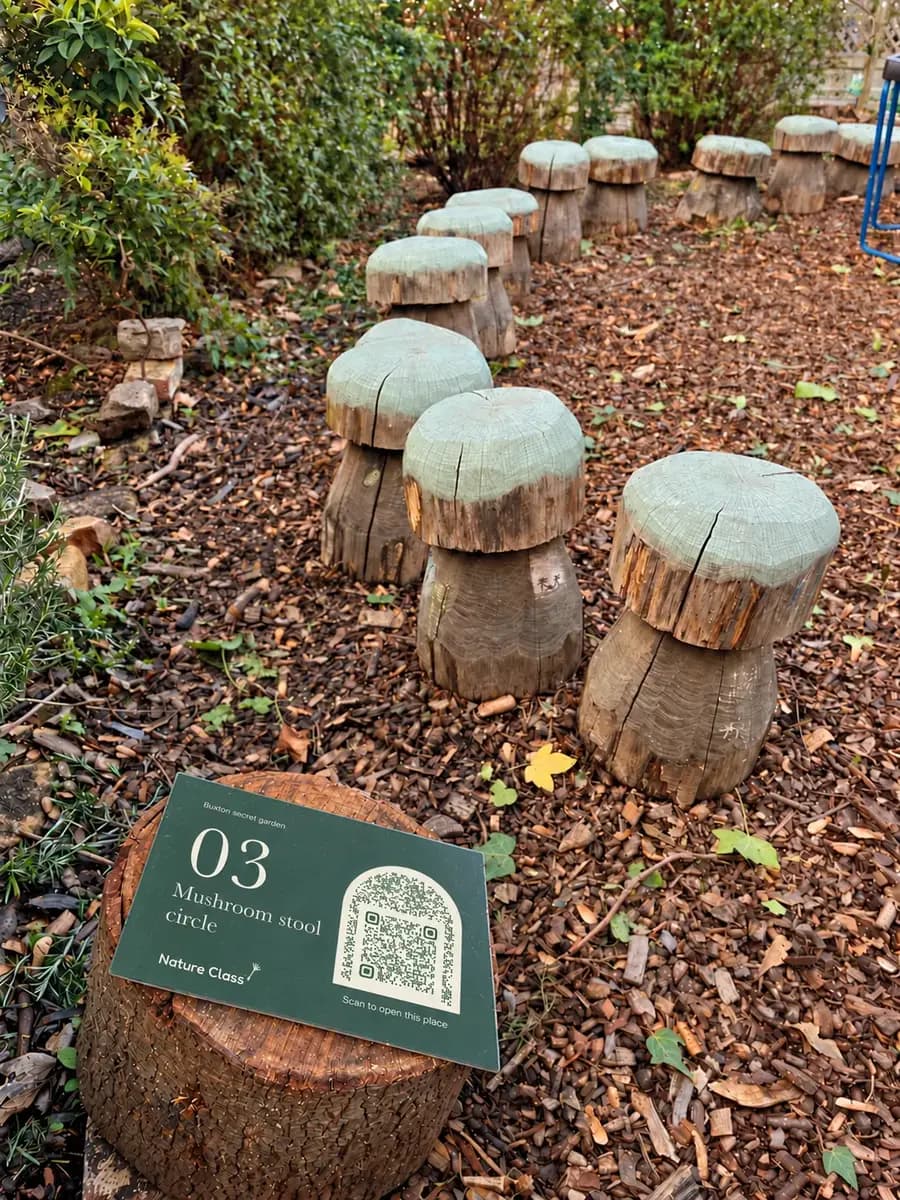
Sign 03 beside carved mushroom stools
03 Mushroom stool circle
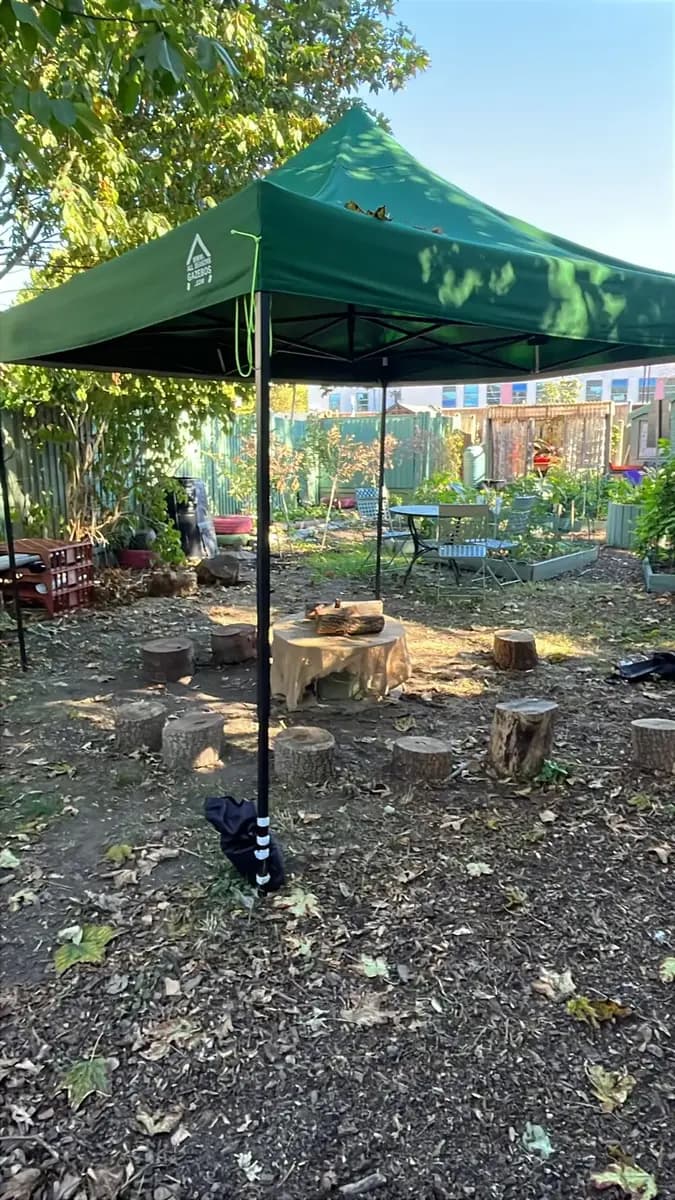
A green canopy over a ring of tree-stump seats
07 Small learning space
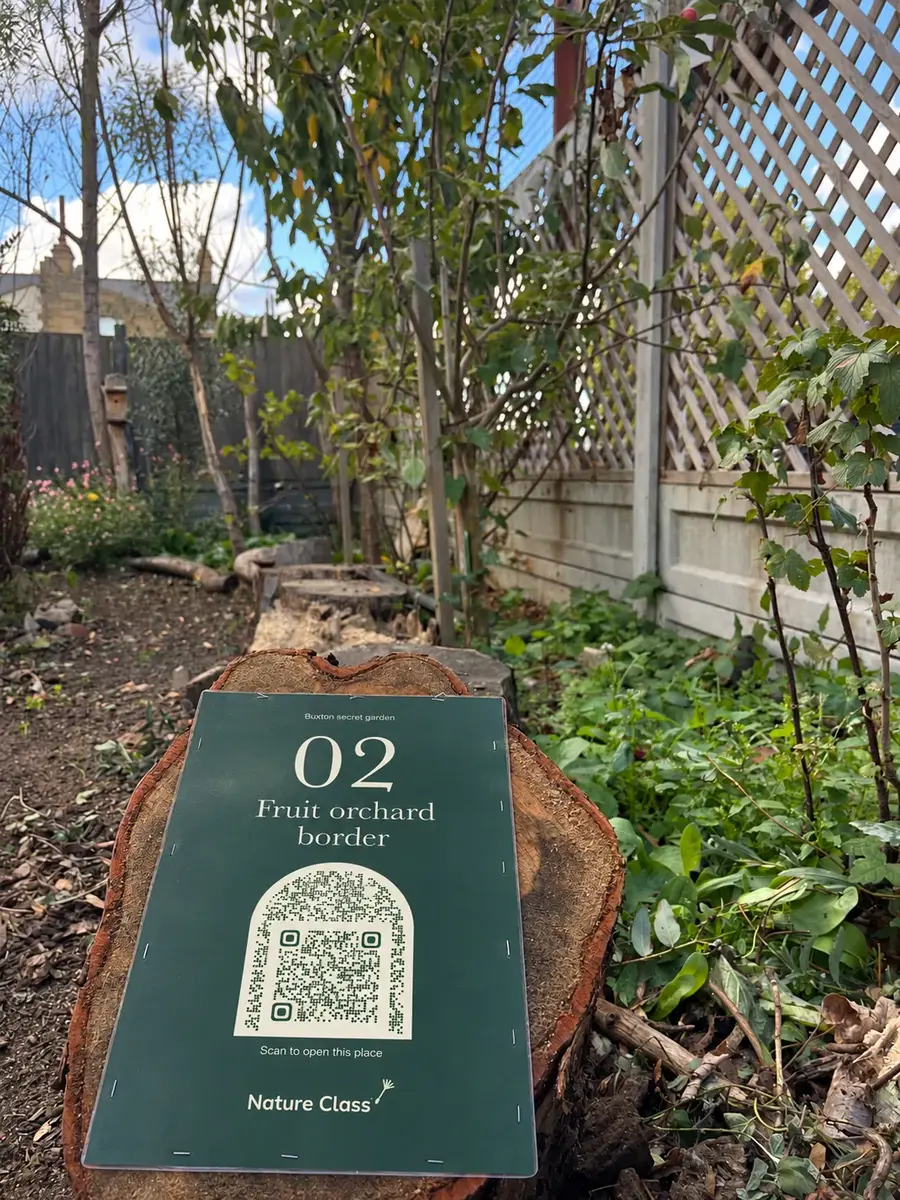
Sign 02 on a log round at the fruit orchard border
02 Fruit orchard border
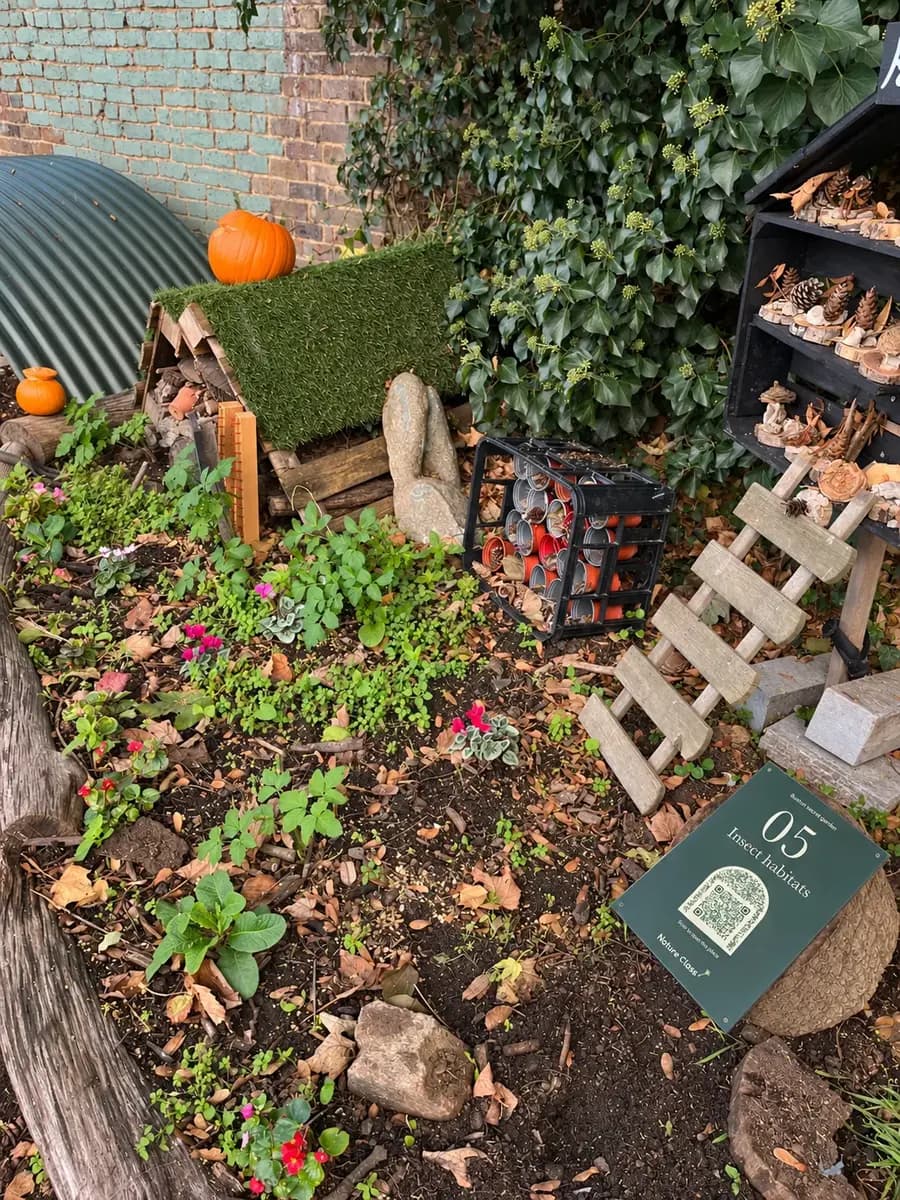
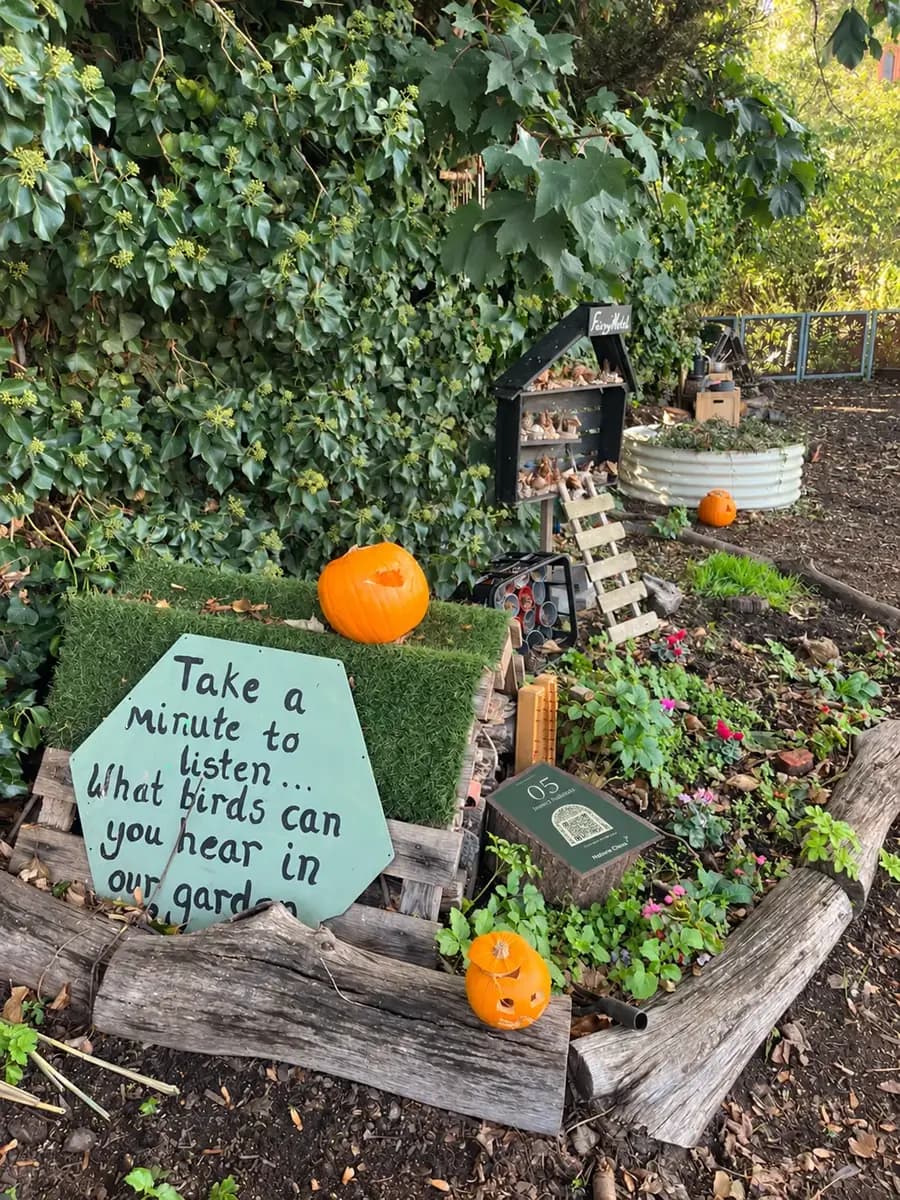
Sign 05 against the bug house, pumpkins on its roof
05 Insect habitats
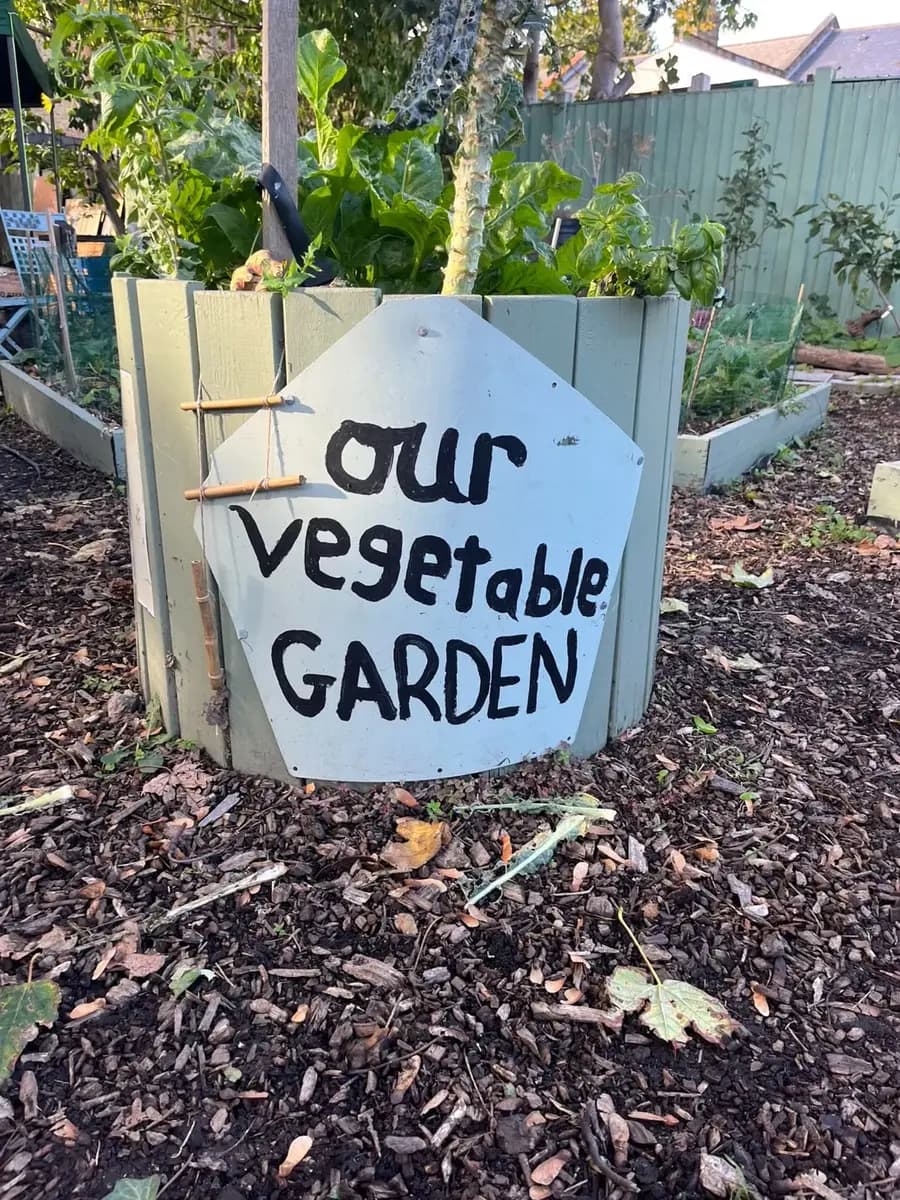
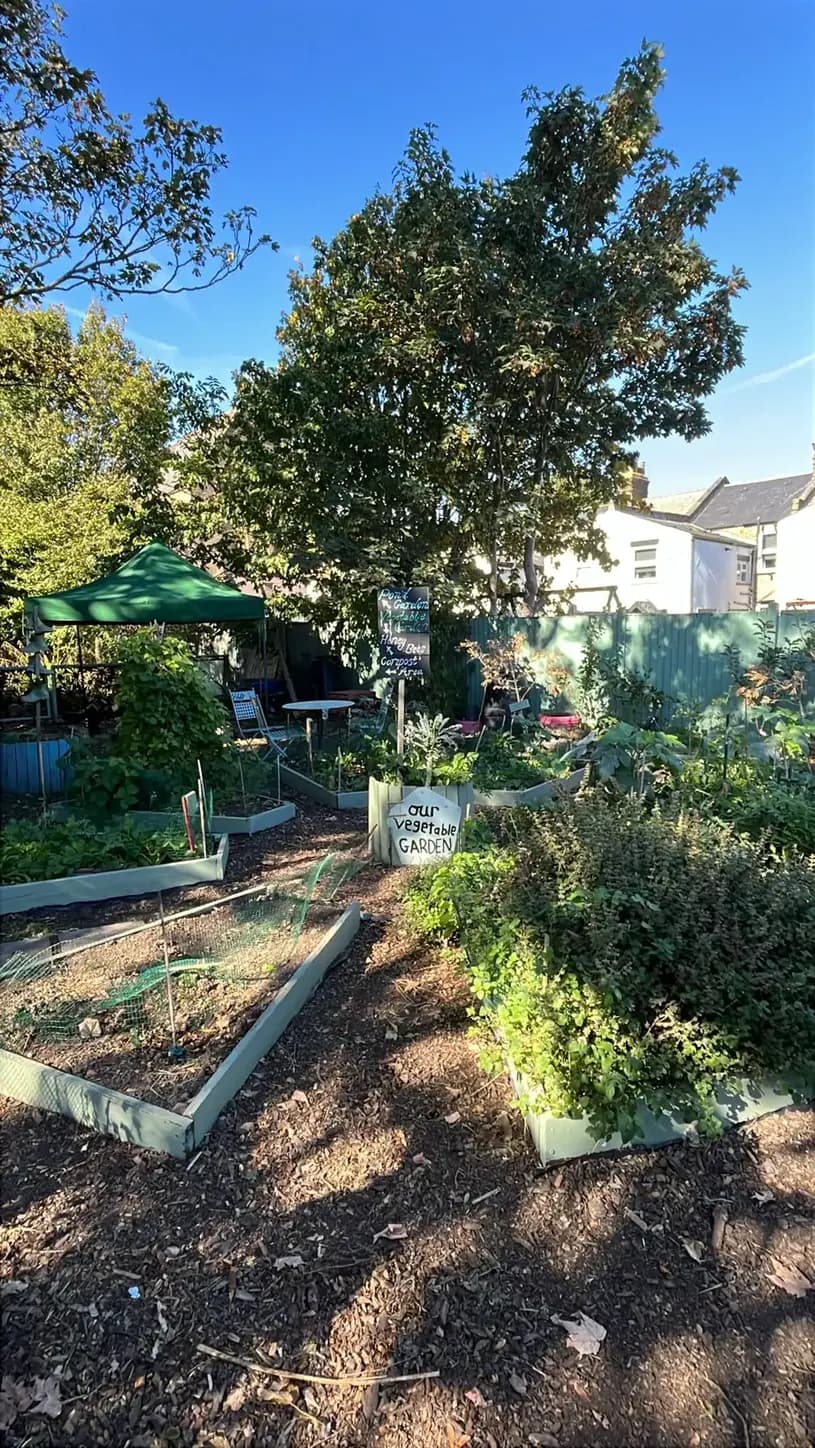
A painted board reading Our vegetable garden on a raised bed
06 Vegetable garden
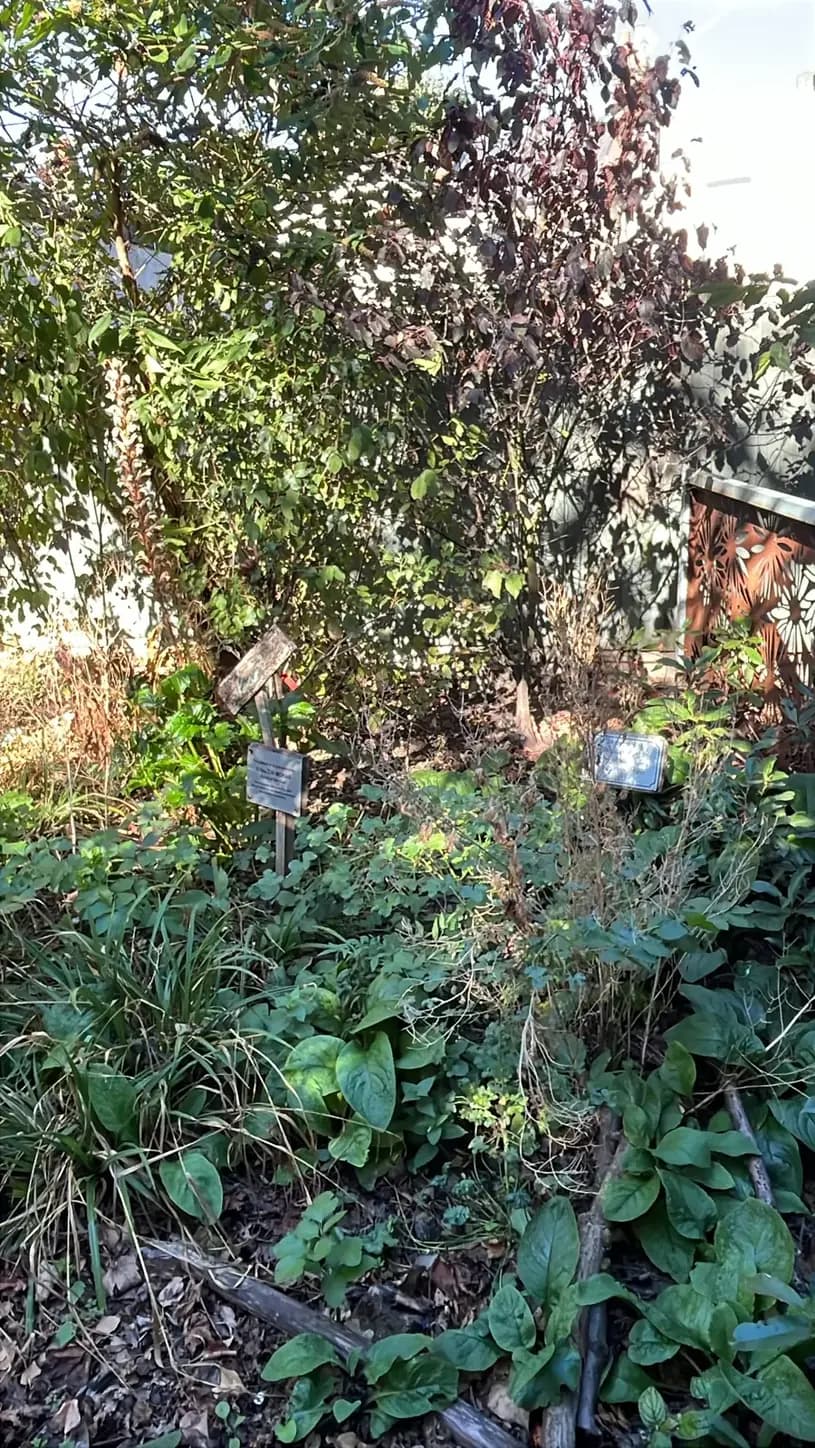
The wildlife space under the trees
08 Pond and log piles

The same place, a different visit.

What opens depends on who is standing there: a family, one person, or a whole class.
Phone screen: Welcome to the garden, a drawn plan with eight numbered points and a welcome to hear
At the gate A plan of the garden and a welcome to hear. Start at any point.
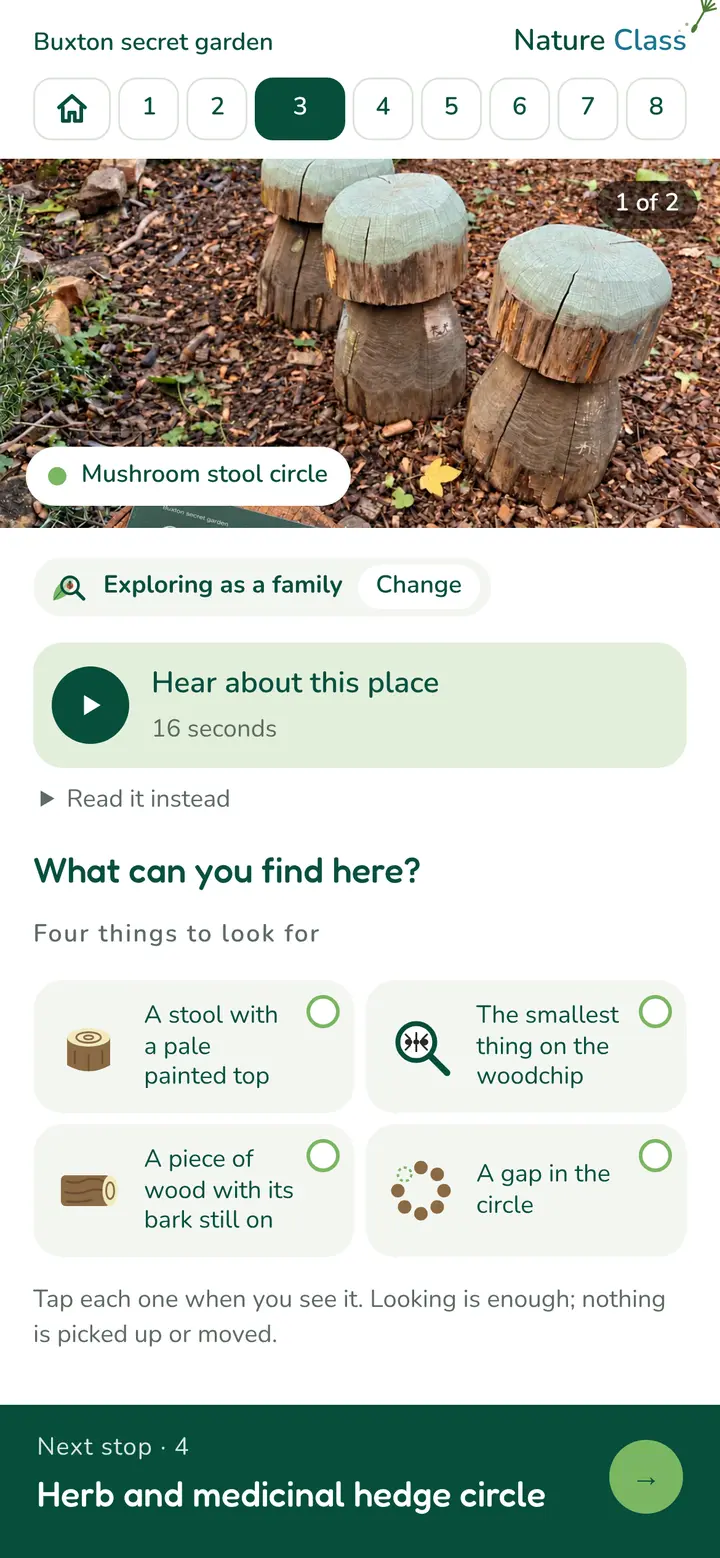
Phone screen at the mushroom stool circle: four things to look for, a stool with a pale painted top, the smallest thing on the woodchip, a piece of wood with its bark still on, a gap in the circle
After school, with a five-year-old Four things to find at the stool circle: a stool with a pale painted top, the smallest thing on the woodchip. Looking is enough; nothing is picked up.
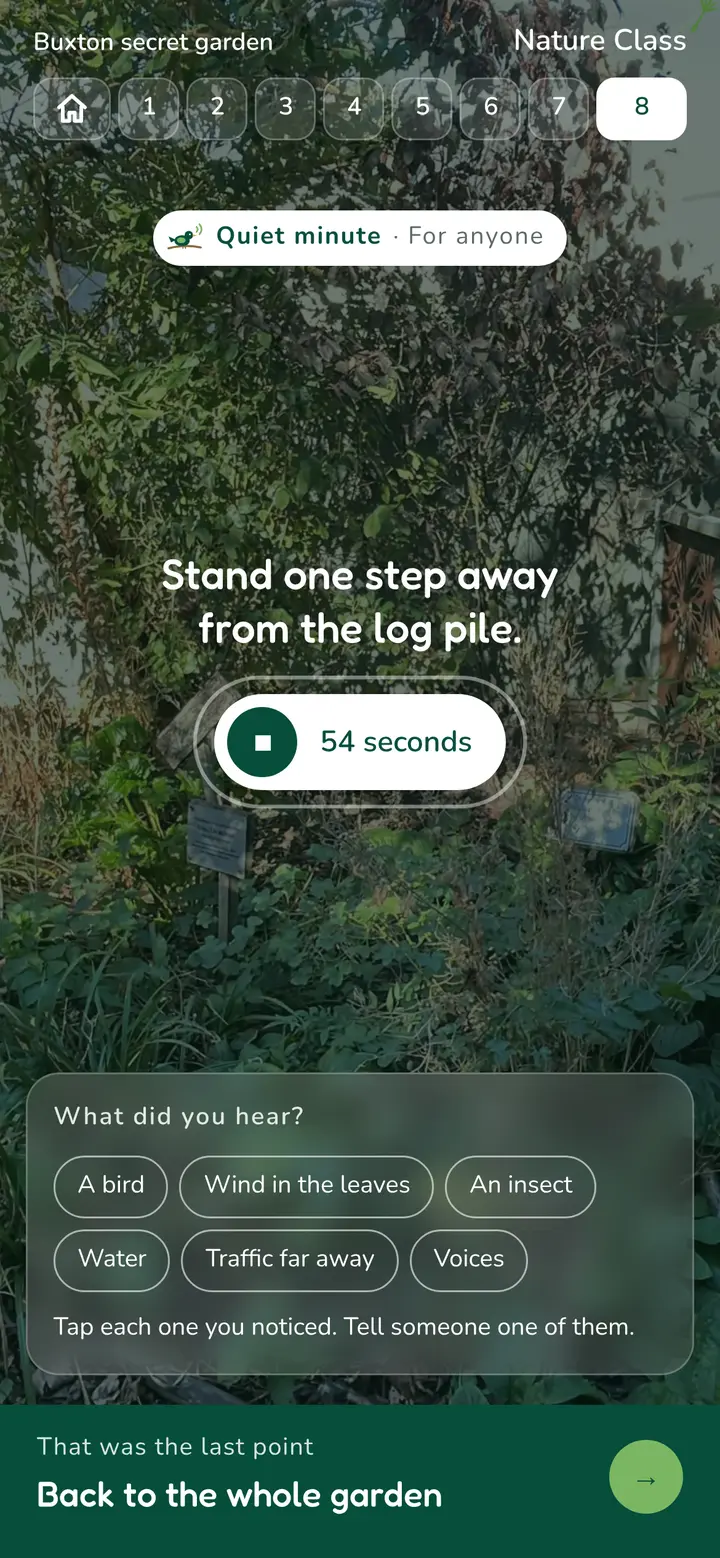
Phone screen of the quiet minute running at the wildlife space, over a photo of the log pile: Stand one step away from the log pile, 54 seconds left, and what did you hear: a bird, wind in the leaves, an insect, water, traffic far away, voices
Five minutes on your own Stand one step back from the log pile and start the minute. Then: what did you hear? A bird, wind in the leaves, traffic far away.

Insect habitats, through the year

It changes when the garden does.

Each place keeps words for each part of the year, and notes that run out on their own. Come back in winter and the bug house tells a different story.

Spring to autumn

“Who lives in a house like this? The chalkboard says ladybirds, bees, woodlice, beetles and spiders. Every stick, cone and hole in the bug house is a place for one of them to hide.”
Look into the holes without touching. Can you see anyone at home?

Late autumn and winter

“In winter the bug house goes quiet, but it is not empty. If a hole has been sealed with mud, someone may be sleeping behind it. Let them sleep.”
Find a hole that has been closed up. Please leave it be. Who might be inside?

Note on the page today Pumpkins on the bug house roof for the autumn display. It drops off by itself after 30 November.
Buxton's bug house in the insect habitats, pumpkins on its turf roof
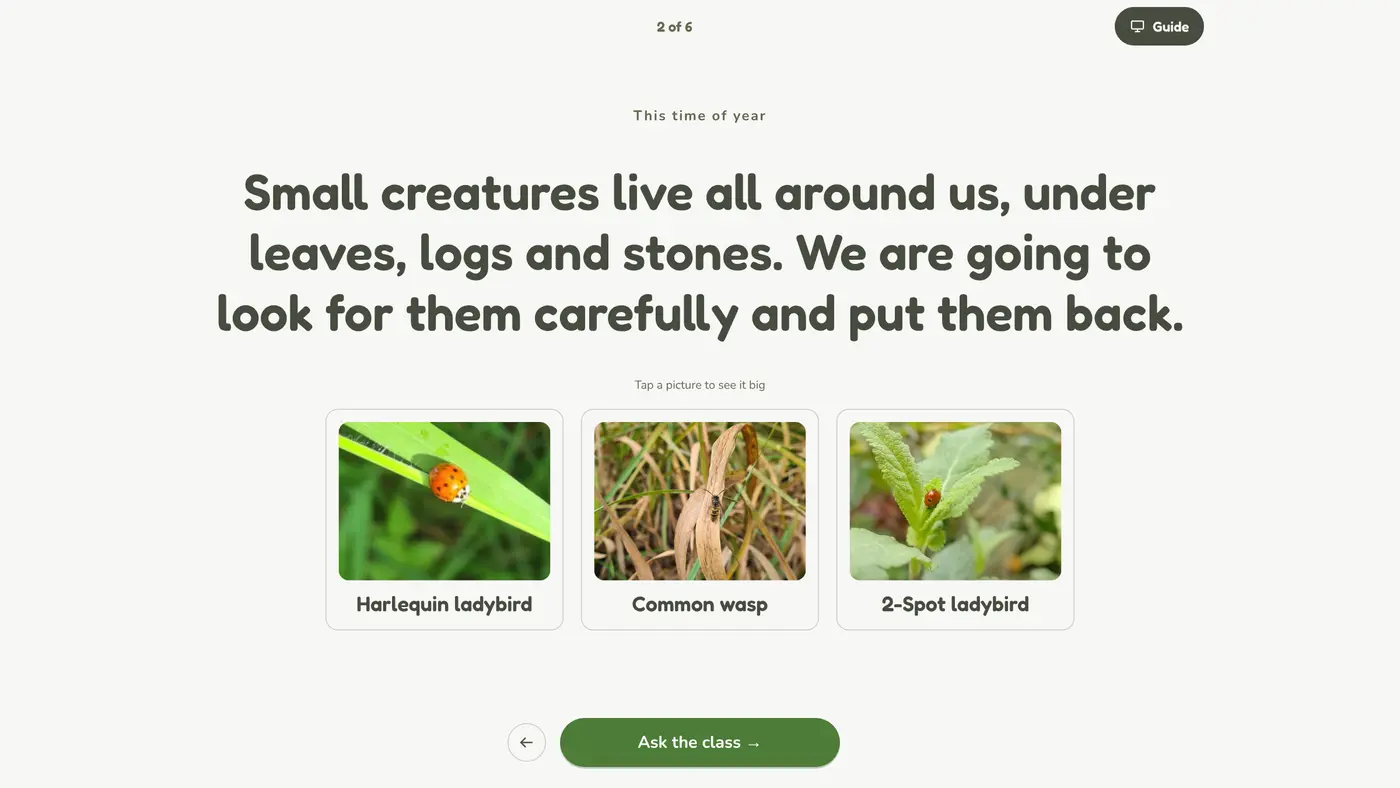
The class board indoors, read for the school's postcode: This time of year. Small creatures live all around us, under leaves, logs and stones. We are going to look for them carefully and put them back. With a harlequin ladybird, a common wasp and a 2-spot ladybird recorded nearby.
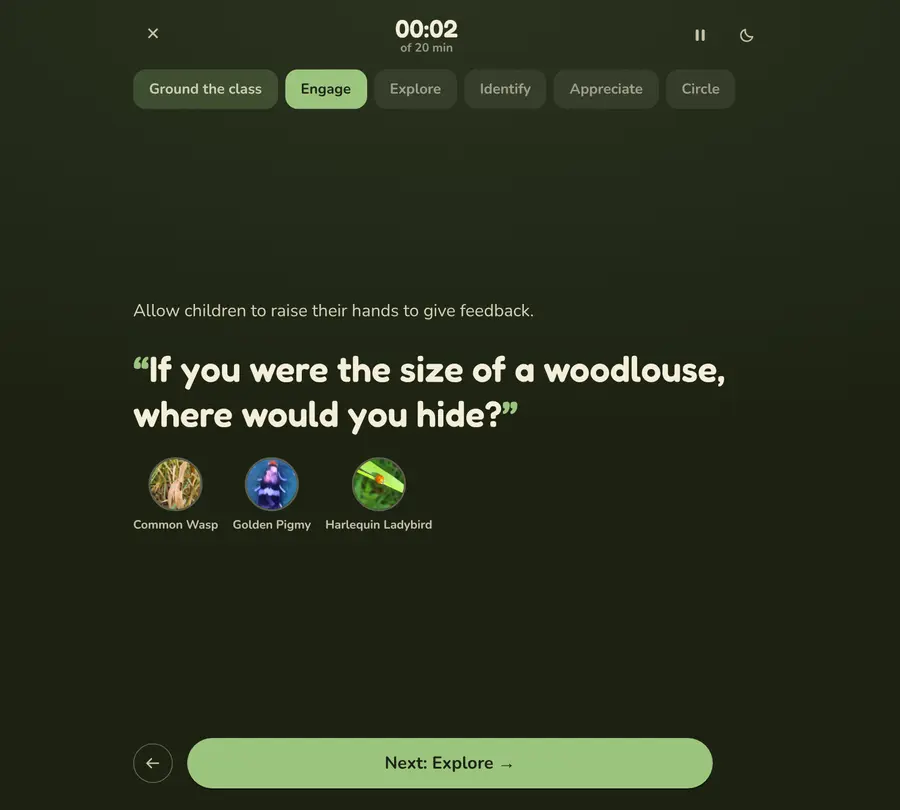
The teacher's view outside: If you were the size of a woodlouse, where would you hide?
Nature Class

Piloting at Buxton

See how a primary school is making nature its classroom.

Autumn opens with a minibeast hunt: the class board indoors, then out to the bug house.

  • Knows the place
  • Knows the season
  • Knows what lives nearby
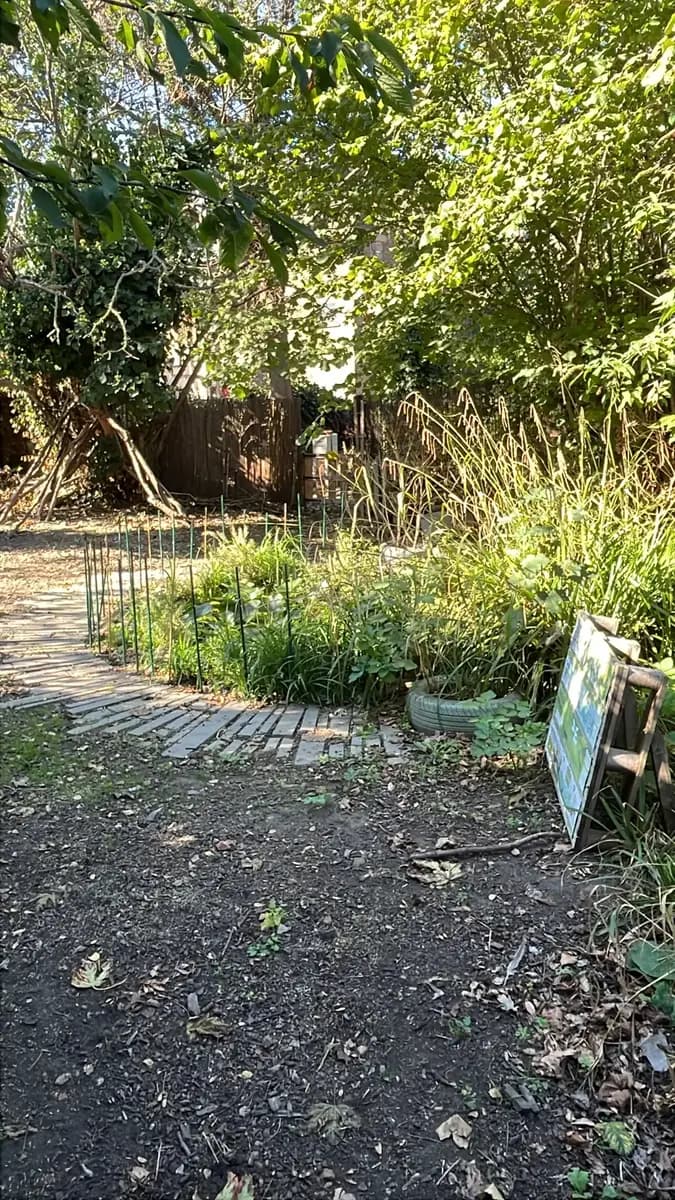
A shaded path into the wild corner
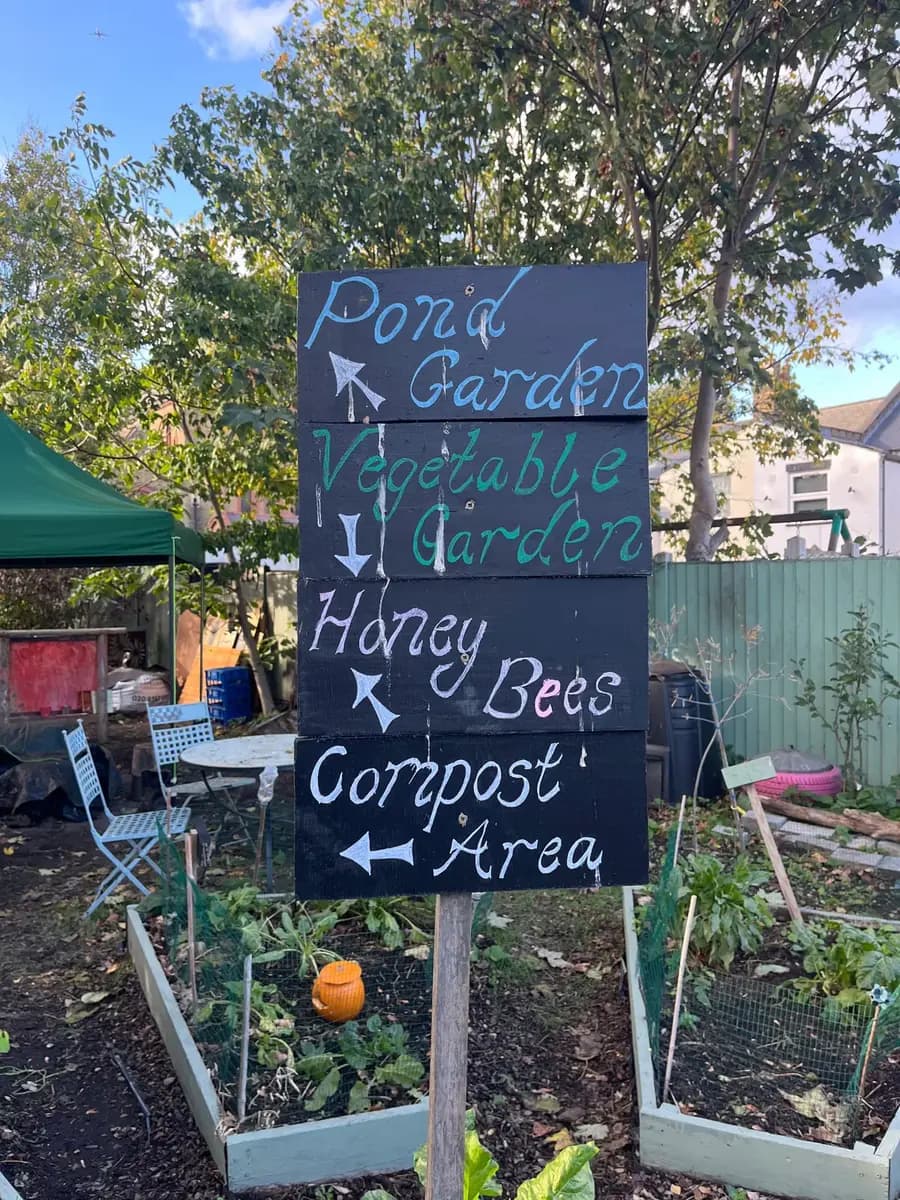
A chalk signpost pointing to the pond garden, vegetable garden, honey bees and compost area
A painted board: Take a minute to listen. What birds can you hear in our garden?
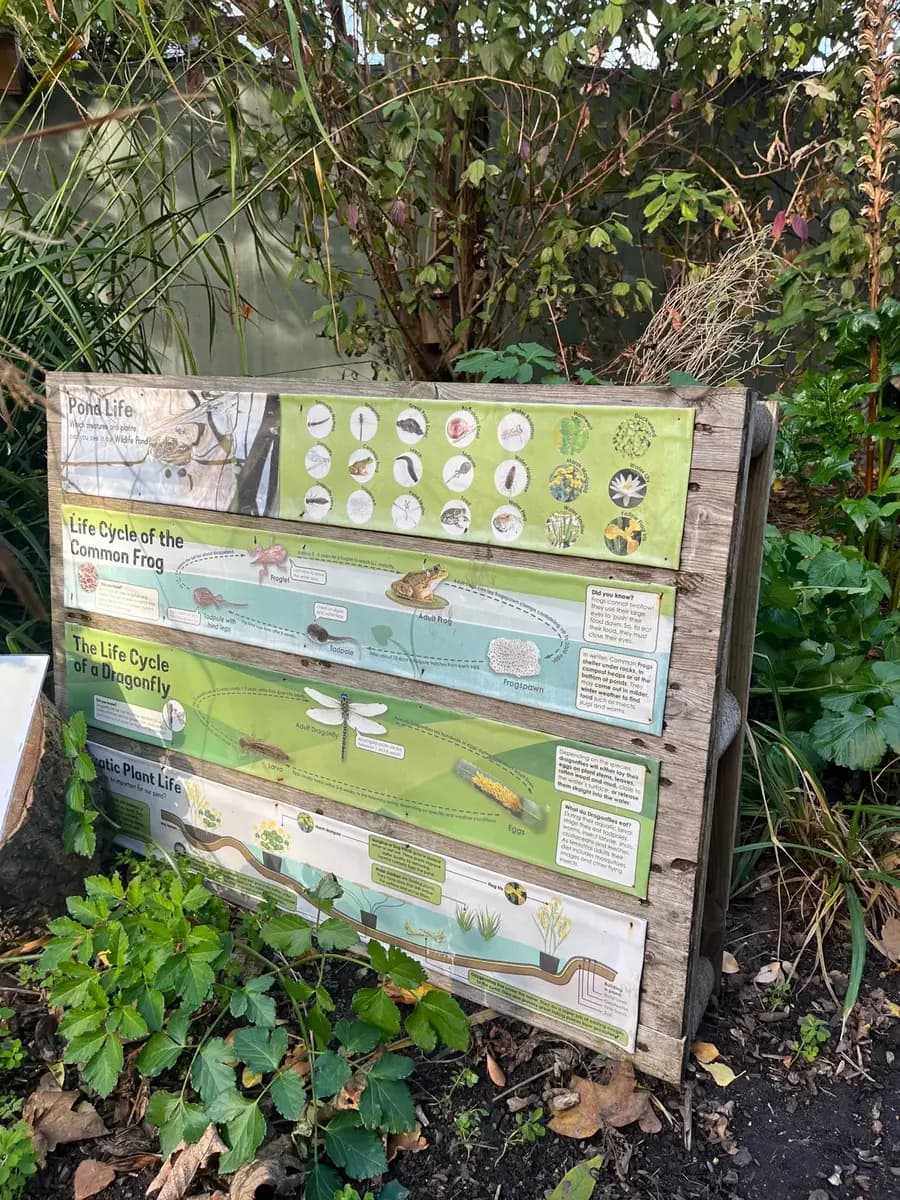
A printed board about pond life, frogs and dragonflies
Raised vegetable beds under a tall tree

Nothing here replaces the garden’s own chalkboards and painted boards. The phone only helps people stop, look closer, and come back in another season.

Live at natureclass.education/grounds/buxton. Made with Nature Class and Pointmoon. Photographs by Buxton School and Johan Gace.

More work

Outdoor lessons for teachers, already written

Nature Class gives any primary teacher one ready outdoor lesson a week, free: every word to say, a note for the adult, the kit list, and a sheet to print. It picks the lesson from where the school is, the season, and that morning's weather. Open source, with no child accounts.

Read more

Ground truth for AI agents acting in the physical world

Pointmoon is ground truth for AI agents acting in the physical world. It gives a model a sourced, time-stamped read of the present moment (weather, season, water, land, sky), or an honest silence when the truth will not hold. It hands over the fact and lets the model do the talking.

Read more

Let's work together